PROUD COWS BRING CALVES BACK TO FARM!
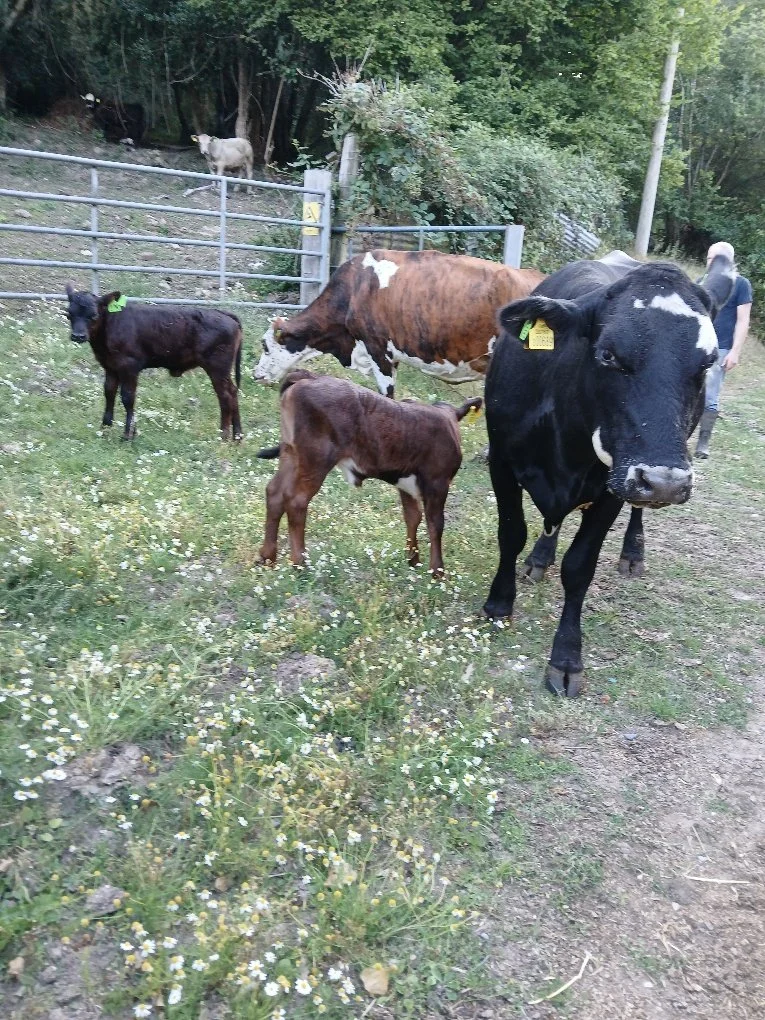
A number of our cows have passed by the farm this morning, showing off their new calves!
Cattle on the Forest
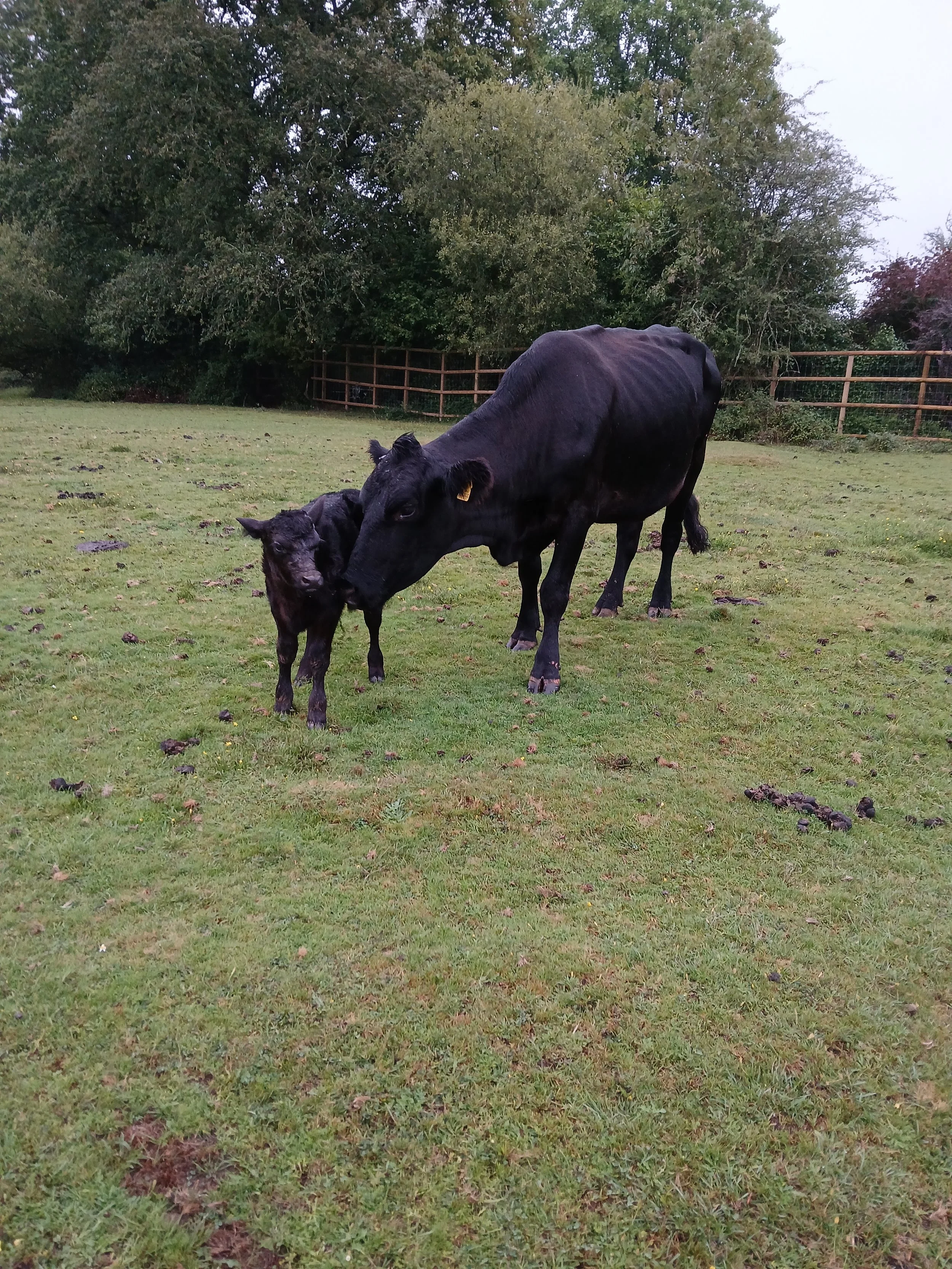
Among the most recognisable sights in the New Forest - alongside ponies, pigs and donkeys - are the free-roaming cattle. From fluffy Highland cows to striking Galloway and Hereford cross breeds, these gentle grazers have long played a vital role in shaping the landscape.
Each year, around 3,000 cattle are turned out to graze the open commons and heathland by New Forest commoners — people with inherited or acquired rights to depasture their livestock on the land. Their presence helps maintain the balance of habitats and supports the rich diversity of plants and wildlife that the New Forest is known for.
A variety of breeds of cattle roam the National Park, with Galloway and Hereford crossbreeds and Aberdeen Angus, all breeds being particularly popular for their hardiness. Our beef herd is mainly Aberdeen Angus.
Cows and Calves are “Udderly” Amazing!!
All our calves are born on the Forest, and without fail the mum’s always make their way home within a couple of days after the birth to show off their new babies!!
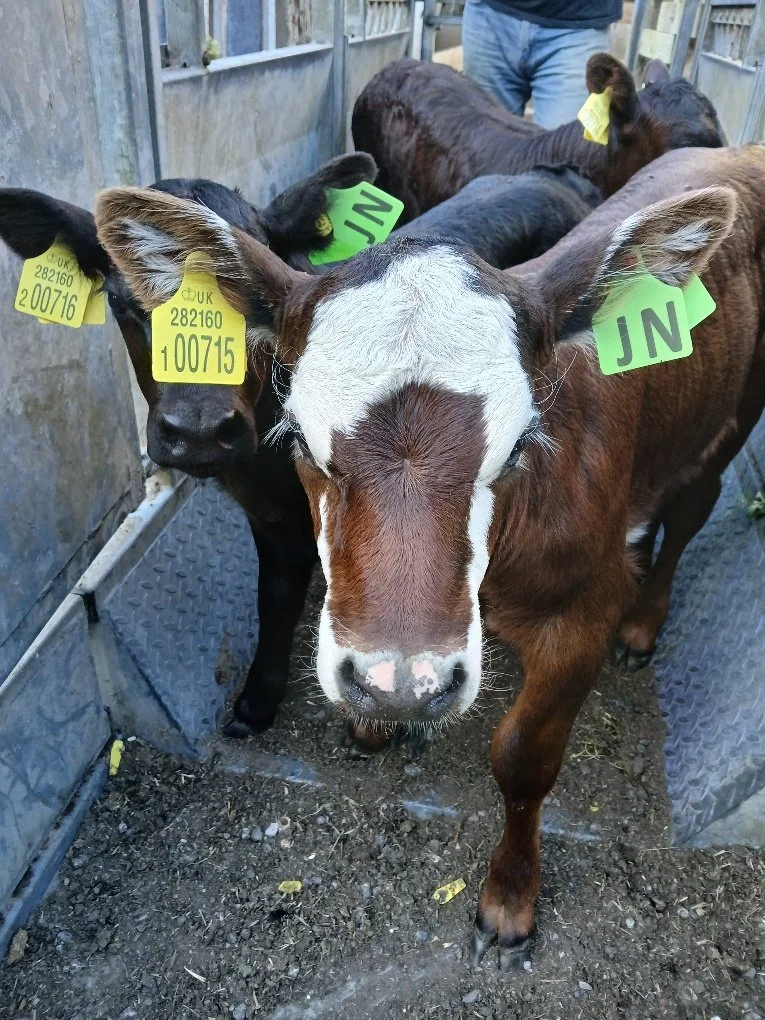
So when we see them, it’s action stations as we need to get them in and give them a quick health check, ear tag them, sex them and register them. All cattle are ear tagged by law - this tag has our herd number and a individual cow number on it. This is used to update our holding registry and also used to register the birth with the British Cattle Movement Scheme. Each cow has their own cattle “passport” to record the animals movement from birth to death. If we have any boys, we castrated them.
Bulls are not allowed to roam on the Forest, and aggression from cattle is rare.
However, a cow which has recently given birth is very protective of her calf, and it is best to keep yourself and dogs well away to avoid causing distress to the mother and it’s baby.
FUN FACTS ABOUT CALVES
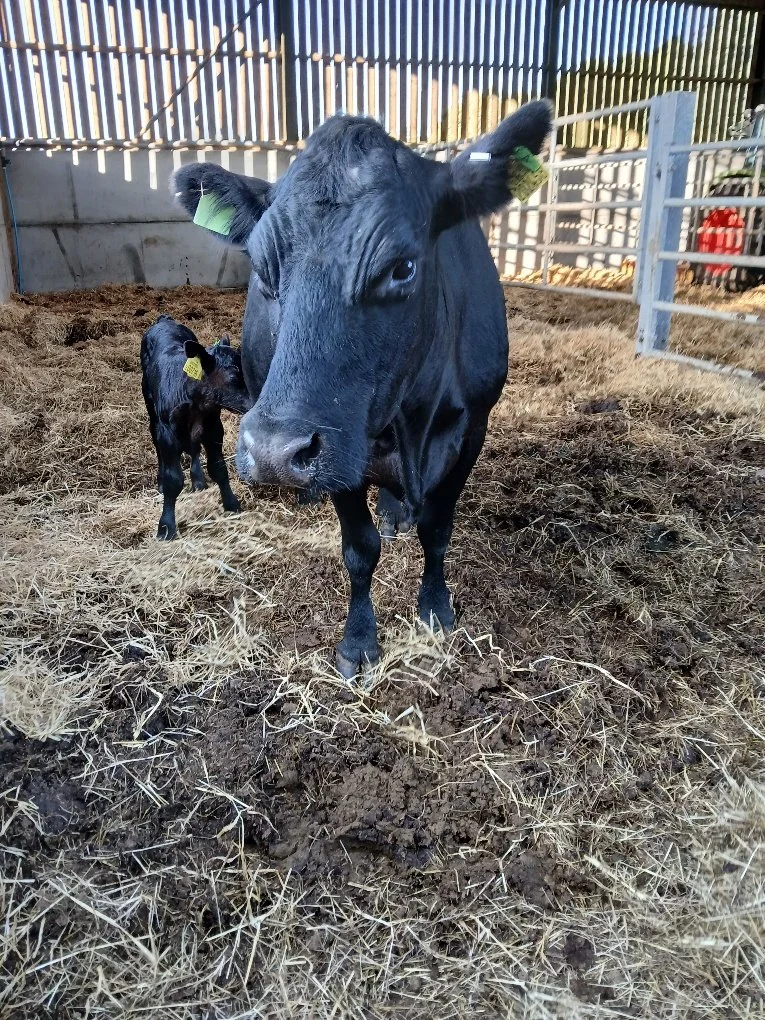
Calves are born without an immune system, which is why it is so important that they get colostrum quickly after birth. Colostrum,
contains the antibodies they need to start building their immune systems.
Calves also have super sharp teeth when they are born.
Newborn calves can see, stand and walk
Calves start to “moo” shortly after birth
Newborn calves weigh between 60-100 pounds at birth
Twin calves is rare, typically only happens 10% of the time
Female calves are called “heifers,” male calves are called “bulls” - once castrated they are known as a steer
Calves drink milk from their mothers udder.
Calves don’t start eating grass until they are 2-4 weeks old
Young cattle are called calves until they reach adulthood at about 2 years old